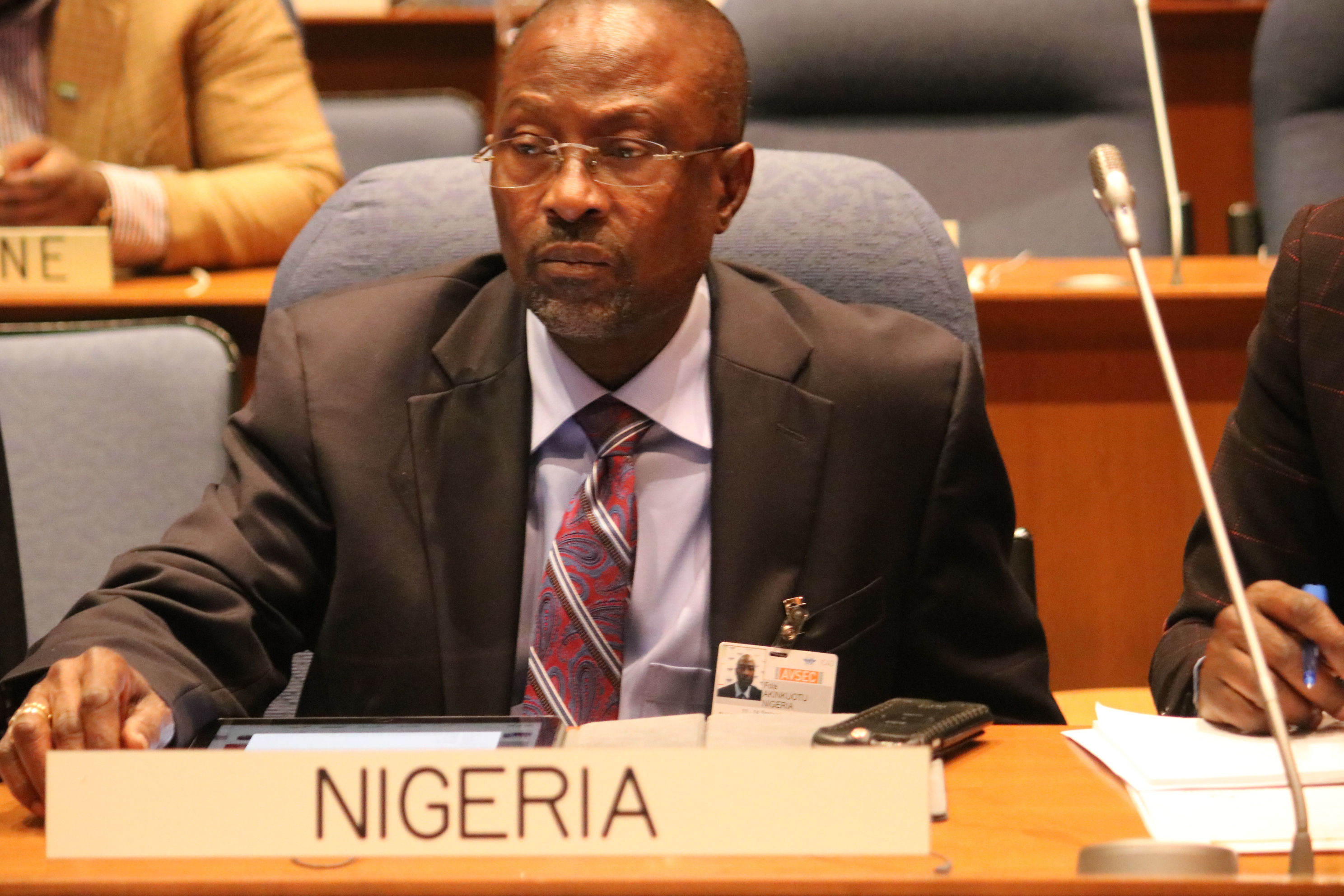
The Managing Director of the Nigerian Airspace
Management Agency (NAMA), Captain Fola Akinkuotu, has said the private sector
cannot establish a strong airline in the country without government input
because it is capital intensive.
Akinkuotu, who stated this on Tuesday, said
Nigeria has not been able to have successful airlines because they are usually
small operators which cannot sustain service for a long time.
He said average life span of Nigerian airlines is 10
years.
The NAMA boss, who is a member of the national
carrier committee, said without government commitment and support, it would be
difficult to establish strong and big airline that can compete with global mega
carriers because Nigeria as sovereign nation has more credit available to it
than private investors.
Akinkuotu said all the airlines that are successful
in the world today have government support because it has to guarantee huge
capital outlay needed to establish a major carrier.
According to him, “The aviation business is one
that requires a lot of money. When you have the money you need good governance.
When you have the money and good governance, you need good management. These
are the things that are missing in Nigeria. If those three things, in my
opinion, are available, nobody is going to be asking for a national airline. So
those are the things that we need to address. A brand new Boeing B737,
depending on how you negotiate it, will cost you $40 million to $50 million. It
can also cost you $100 million.
“Do we have airlines that have this kind of money
to play with? Do we have financial institutions that have this kind of money to
play with? Generally, the airline business is a business in which you need
long-term funds but the funds available in this neighbourhood are short-term.
So you find the airlines using short-term funds to address long-term business.
It will always result in problems.”
He said this is why Nigerians need a national
carrier so that the country can compete effectively in the global market.
The NAMA boss said the resources needed to fund a
big airline is not available by individuals and institutions in Nigeria.
“We are at the gestation period of the funds coming
up, when you have insurance and pension schemes that have so much money; they
will grow but we are not there yet. Nigeria as a sovereign country has more
credit available to it than a private investor.
“So no matter how bright my idea is, government has
more. Of course, over time, I can demonstrate it if I have good governance, if
I have good books, I can begin to increase my credit. But when you start
talking about outsiders, sovereign guarantee is important,” he stated.
The NAMA boss said for Nigeria to have successful
airlines, they have to be exposed to long-term loans at single digit interest,
and as far as Nigerian airlines cannot access long-term loans, they would
continue to be small airlines.
Akinkuotu has reinforced what aviation consultant
and CEO of Aso Savings and Loans, Ali Magashi, said about the need for
government to make input in establishing a strong national carrier in Nigeria.
He said because of the poor returns on investment,
the private sector might not be able to invest the quantum of funds needed to
fund a strong national carrier.
Magashi said considering the fact that aviation is
a critical infrastructure, which service is also critical, it becomes part of
government’s social services to the people, “and this explained why most of the
airlines established in the world before now started as national carriers,
except in the United States.
“All the airlines that top the world are either owned
or still owned by the government. The reason is simple; aviation is not
competitive in terms of returns, but it benefits other sectors of the economy
and that is where government makes its profit. The truth is, there is no
successful flag carrier in the world, so it is evident that aviation cannot be
grown by the private sector alone. It is essentially a government turf, but the
major challenge in Nigeria is political interference, which inhibited the
growth of the Nigeria Airways.”


No comments:
Post a Comment